PN
Dr. Paul Nassif
b. 1962 · United States
Facial plastic surgeon & television personality
A Lebanese-American otolaryngologist and facial plastic surgeon in Beverly Hills, Paul Nassif is internationally known as a specialist in rhinoplasty — above all revision rhinoplasty, repairing nose surgeries gone wrong. Since 2014 he has co-hosted the E! series Botched with Dr. Terry Dubrow, and he earlier appeared on The Real Housewives of Beverly Hills.
Sources: Wikipedia; nassifmd.com — details
ZN
Zaki Nassif
1916 – 2004 · Lebanon
Composer & singer — a father of Lebanese folk music
Born in Mashghara in the Bekaa Valley and trained in music at the American University of Beirut, Zaki Nassif helped invent the modern Lebanese school of song, weaving village dabkeh rhythms into refined orchestral writing. He composed roughly 1,100 works, sung by Fairuz among others, and his wartime anthem “Raje‘ Yit‘ammar Loubnan” (“Lebanon Will Be Rebuilt”) became a national touchstone of hope. AUB’s Zaki Nassif Program for Music preserves his legacy.
Sources: Wikipedia; AUB Zaki Nassif Program; Al Jazeera obituary — details
TN
Thomas A. Nassif
b. 1941 · United States
Diplomat & agricultural industry leader
Born in Cedar Rapids, Iowa, to a family that emigrated from Lebanon — his father left the Bekaa Valley village of Ain Addab in 1924 and began in Iowa as a door-to-door peddler — Tom Nassif rose from agricultural labor attorney to the Reagan White House — serving as Deputy Chief of Protocol and Deputy Assistant Secretary of State — before his appointment as U.S. Ambassador to Morocco (1985–1988). He later led Western Growers, the powerful association of fresh-produce farmers, as president and CEO from 2002 until his retirement in 2020.
Sources: ATFL; U.S. Congress witness bio; Western Growers — details
MN
Monica Nassif
United States
Entrepreneur — founder of Mrs. Meyer’s Clean Day
From Minneapolis, Monica Nassif built two of America’s best-known household brands: the upscale Caldrea line (2000) and Mrs. Meyer’s Clean Day (2002), the garden-fresh cleaning brand named for her Iowa homemaker mother, Thelma Meyer. A pioneer of plant-based cleaning products, she sold the companies to S.C. Johnson in 2008 and has since told the story in her book I Bottled My Mother.
Sources: Star Tribune; U.S. Chamber of Commerce; Twin Cities Business — details
LN
Luís Nassif
b. 1950 · Brazil
Journalist & economic commentator
Born in Poços de Caldas to a family of Lebanese and Italian descent, Luís Nassif became one of Brazil’s most influential economic journalists — a longtime columnist for Folha de S.Paulo, a participant in the project that created the Datafolha polling institute, and founder of the independent Jornal GGN. He is also a mandolin player and scholar of choro music. His sister, Maria Inês Nassif, is likewise a prominent journalist.
Sources: Wikipedia; Portal dos Jornalistas — details
RN
Sr. Rosemarie Nassif
b. 1941 · United States
Chemist, religious sister & university president
A School Sister of Notre Dame with a Ph.D. in physical chemistry from the Catholic University of America, Rosemarie Nassif led two universities — the College of Notre Dame of Maryland (1992–1996) and Holy Names University in Oakland (1999–2010) — and later directed the Center for Catholic Education at Loyola Marymount University, shaping Catholic education policy nationwide.
Sources: Wikipedia; Angelus News; LMU — details
GN
Gabriel Nassif
b. 1983 · France
Professional card player — Hall of Famer
Widely regarded as one of the greatest Magic: The Gathering players ever, Paris-born Gabriel Nassif won Pro Tour titles in Atlanta (2005, a team title with Team Nova) and Kyoto (2009), was named 2004 Player of the Year, and was inducted into the game’s Hall of Fame in 2010. Celebrated for his self-built decks, he has since competed in professional poker as well.
Sources: Wikipedia; magic.gg Hall of Fame — details
AN
Abdullah Omar Nasseef
1939 – 2025 · Saudi Arabia
Geologist, university president & Islamic leader (Nasseef spelling)
Born in Jeddah, Abdullah Omar Nasseef earned his doctorate in geology at the University of Leeds and rose to the presidency of King Abdulaziz University in 1980. He served as Secretary-General of the Muslim World League (1983–1993), sat as a vice-president of Saudi Arabia’s Consultative Assembly, and received the King Faisal International Prize for Service to Islam in 1991.
Sources: Wikipedia; Arab News obituary — details
MH
Sheikh Muhammad Husayn Nasif
1885 – 1971 · Saudi Arabia
Scholar & bibliophile of Bayt Nasseef (Nasseef spelling)
Grandson and heir of the builder of Nasseef House, Muhammad Husayn Nasif made the family home famous twice over: as the house where King Abdulaziz resided after 1925, and as the seat of the Hejaz’s most celebrated private library — more than six thousand volumes, run as an open lending library (scholars used it “as if it were a public library,” the traveler Amin al-Rihani recorded) and now preserved at King Abdulaziz University. He financed printed editions of classical Arabic texts, corresponded with kings and scholars across the Muslim world — seven volumes of letters — and was called by the biographer al-Zirikli the foremost man of Jeddah of his age.
Sources: Arabic Wikipedia; al-Eqtisadiah; Philological Encounters (2025) — details
NN
Nicolas Nassif
b. 1954 · Lebanon
Political journalist & historian of the Lebanese state
One of Lebanon’s most respected political analysts, Nicolas Nassif has chronicled the country’s politics for half a century — since 2006 as a political columnist for the Beirut daily Al-Akhbar, and since 2000 as a correspondent for Radio Monte Carlo International. His books are standard institutional histories: studies of Camille Chamoun, Raymond Eddé and Fouad Chehab’s republic, a history of the General Security directorate 1945–1977, and The Armies of Lebanon, tracing the army through the civil war’s divisions to reunification.
Sources: Arabic Wikipedia; The Monthly Magazine — details
PN
Philippe Nassif
1971 – 2022 · Lebanon & France
Journalist & popular philosopher
Born in Beirut and educated at Sciences Po, Philippe Nassif made philosophy a Paris newsroom’s business: a founding-era voice of the magazine Technikart, a decade (2009–2019) as editorial advisor to Philosophie Magazine with some two hundred articles and interviews, and the author of four books, from Bienvenue dans un monde inutile to Ultimes. On his death at fifty, the magazine remembered him as “a thinker of tireless curiosity.”
Sources: French Wikipedia; L’ADN tribute — details
TN
Thiago Nassif
São Paulo–born · Brazil
Musician & producer — Brazil’s experimental edge
A songwriter, guitarist and producer bridging bossa nova and no-wave, Thiago Nassif is a close collaborator of the American avant-garde legend Arto Lindsay — who co-produced Nassif’s acclaimed 2020 album Mente and calls him “the leading light of the new generation of Brazilian songwriters.” His records — Três, Mente, Dobra de Língua (2025) — have drawn international press attention from New York to London.
Sources: The FADER; WOMEX — details
RN
Rafael Nassif
b. 1984 · Brazil & Austria
Composer — new classical music
Born in Brasília and based in Graz, Austria since 2015, Rafael Nassif writes finely-heard contemporary classical music exploring microtonality and the spatial life of sound. He has twice won Tokyo’s Irino Prize for chamber music (2011 and 2015) and received the Akademie der Künste’s 2015 Kunstpreis Berlin for music; his works have been performed by the SWR Vocal Ensemble and the Minas Gerais Philharmonic.
Sources: ORF musikprotokoll; Music Austria — details
HN
Helen G. Nassif
United States
Philanthropist — Cedar Rapids’ benefactor
Raised on B Avenue in Cedar Rapids and educated at Coe College (class of 1940), Helen G. Nassif became a U.S. government lawyer for three decades and then a real-estate developer in Maryland — and returned her fortune to her hometown. Gifts of more than $7.4 million put the Nassif name across the city: the Helen G. Nassif Community Cancer Center, St. Luke’s Hospital’s heart center and women’s-and-children’s center, the downtown Helen G. Nassif YMCA, Coe College’s Nassif House (honoring also her brother, Michael Nassif ’35), and the cultural center of St. George Orthodox Church.
Sources: The Gazette; Coe College; UnityPoint Health — details
BN
Bradley Nassif
United States
Theologian — Orthodox & evangelical dialogue
Raised in a Lebanese Orthodox family at St. Mary’s parish in Wichita, Kansas, Bradley Nassif — now Fr. Gabriel Nassif, an Antiochian Orthodox priest — is widely regarded as the leading authority on the dialogue between Eastern Orthodoxy and evangelical Protestantism. A Fordham-trained patristics scholar who studied under Fr. John Meyendorff and taught for years at North Park University in Chicago, he wrote The Evangelical Theology of the Orthodox Church and continues to teach in the Antiochian House of Studies.
Sources: St Vladimir’s Seminary Press; parish records — details
A landmark of the name
Nasseef House — Jeddah, Saudi Arabia
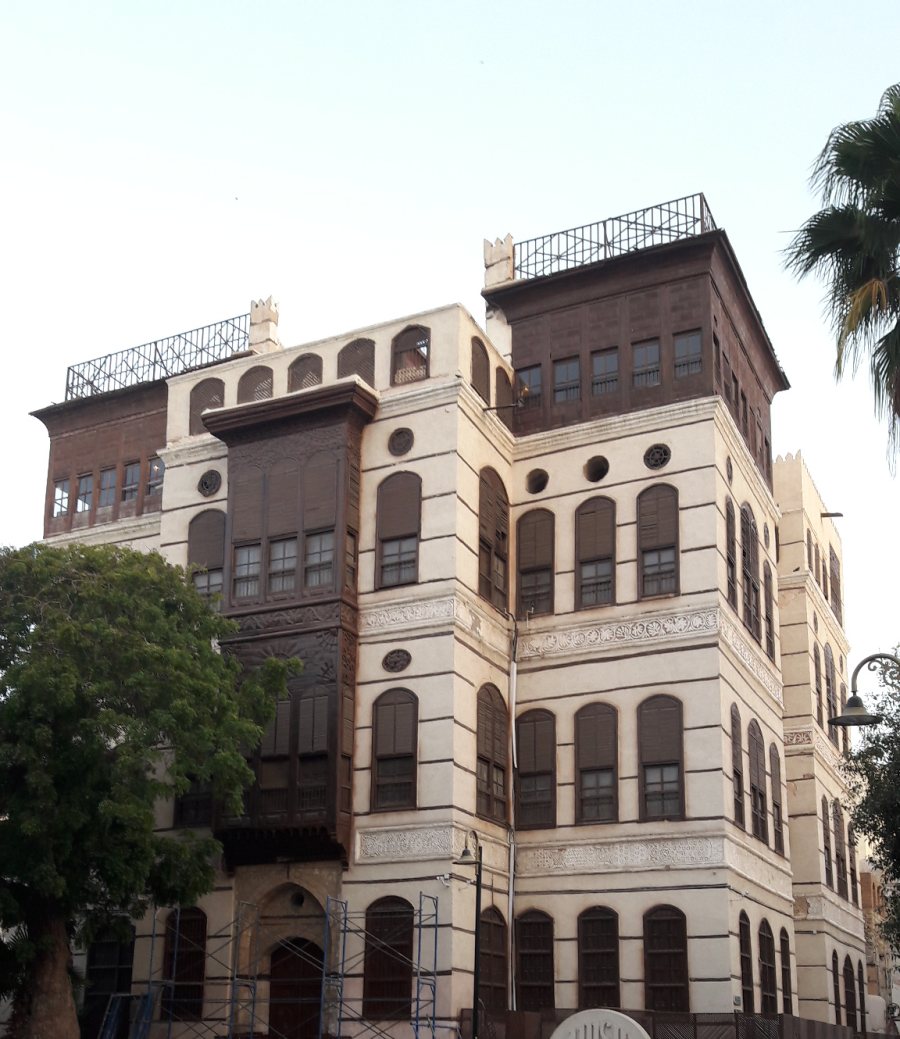
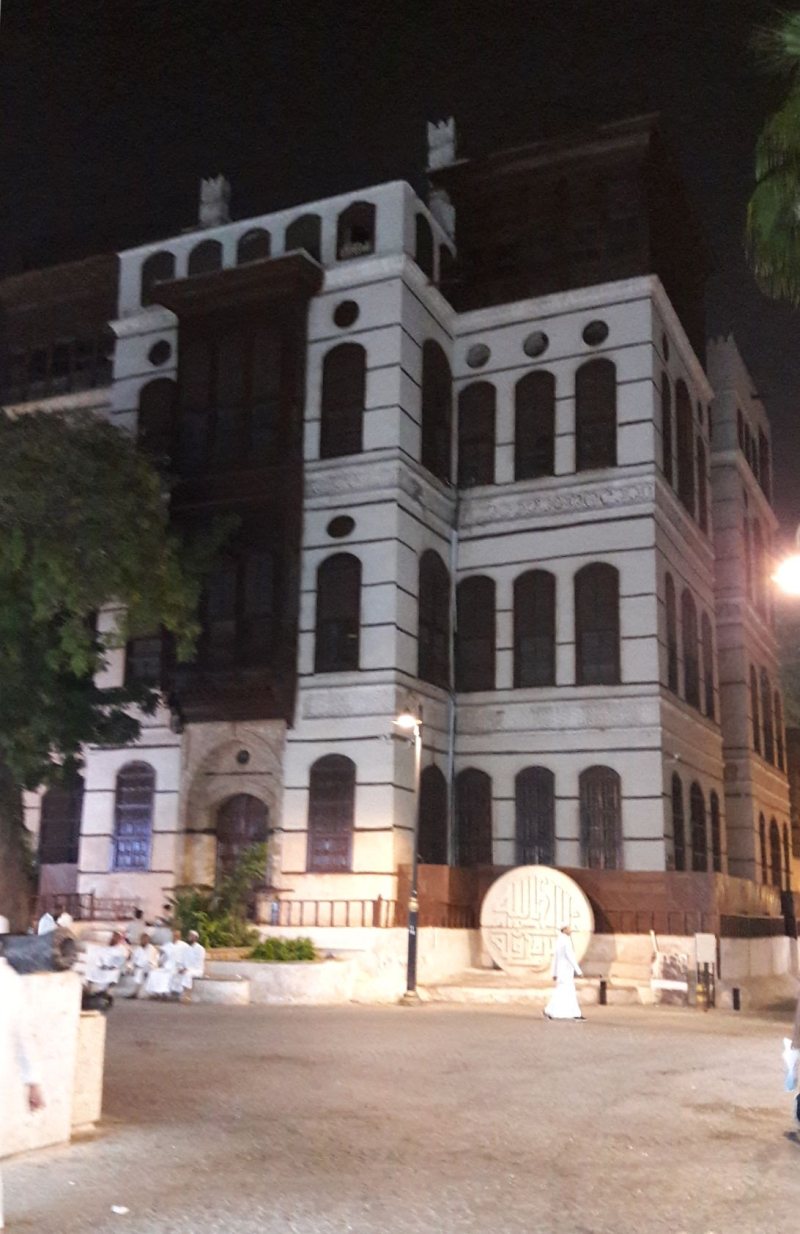
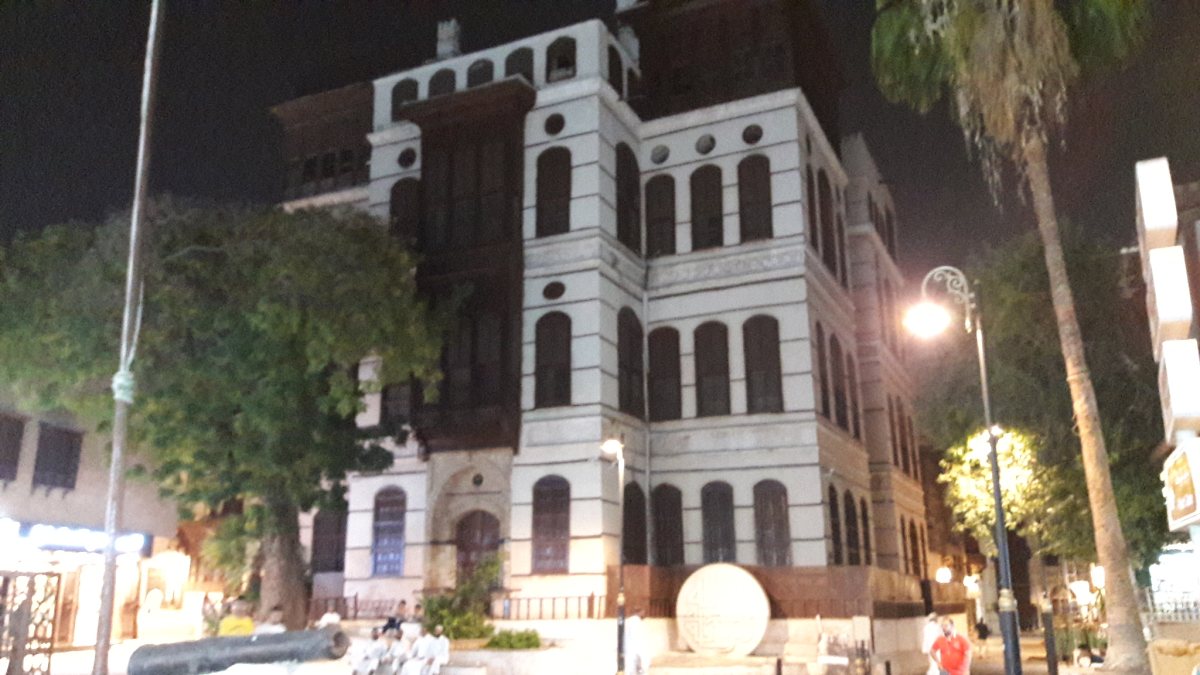
On Suq al-Alawi, the old main street of Jeddah’s coral-built historic quarter, stands
the house that carries the family name furthest into architectural history. Built
between 1872 and 1881 for Omar Nasseef Effendi — a wealthy merchant
and leading notable of Ottoman-era Jeddah, whom later accounts often style the
city’s governor — Bayt Nasseef spreads some forty rooms — over a
hundred by other counts — across four principal floors,
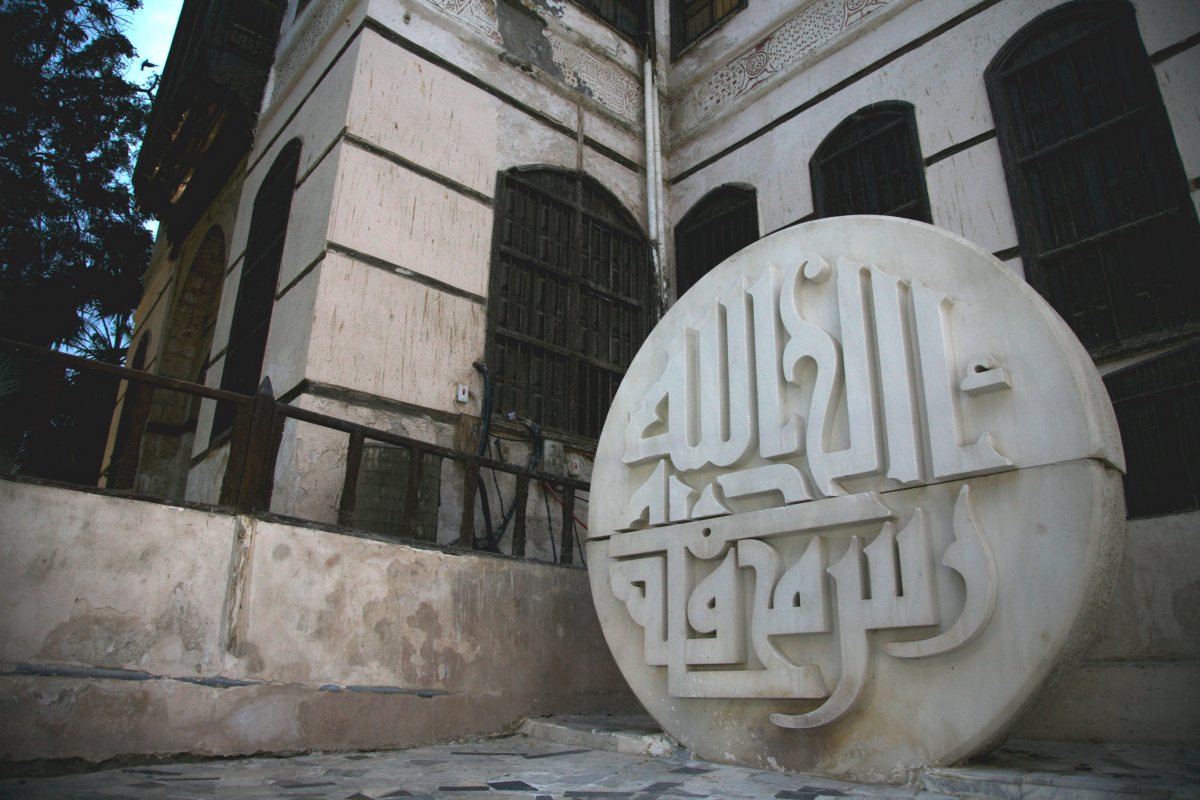
cooled by windcatchers and screened by carved wooden rawashin balconies. Jeddans
knew it as “the house with the tree” — the neem at its door was long said to be the only
tree in the city. (The family writes its name
نصيف — a Hejazi cousin of the Levantine
ناصيف that meets it in Latin letters.)
In December 1925, after the siege of Jeddah, King Abdulaziz Ibn Saud
made the house his royal residence in the city, receiving statesmen and petitioners
there for roughly a decade. In the twentieth century the house was famous a second
way: as the seat of the Hejaz’s greatest private library, built by the founder’s
grandson Sheikh Muhammad Husayn Nasif (see his profile above) and now
preserved at King Abdulaziz University. Restored in the twentieth century and renovated
again in recent decades, it serves today as a museum and cultural centre — a centrepiece
of Historic Jeddah, the “Gate to Makkah,” inscribed on UNESCO’s World Heritage List in
2014.
Sources for this history →
NA
Nasif al-Nassar
d. 1781 · Jabal Amil
Sheikh of Jabal Amil — the name’s first famous bearer
The most powerful Shiite sheikh of Jabal Amil (today’s South Lebanon), Nasif al-Nassar ruled from Tebnine, allied himself with Zahir al-Umar of Galilee, and prospered on the cotton trade with Europe. He fell in battle against the Ottoman governor Jazzar Pasha at Yaroun on 24 September 1781 — and is remembered still: his descendants became the El Assaad political family of Lebanon.
Sources: Wikipedia; Stefan Winter, The Shiites of Lebanon under Ottoman Rule — details
NY
Nasif al-Yaziji
1800 – 1871 · Lebanon
Scholar-poet — a father of the Arab renaissance
Born in Kfarshima to a Greek Catholic family, Nasif al-Yaziji became a pillar of the Nahda, the 19th-century Arab literary renaissance: reviver of classical Arabic letters, co-founder of the Arab world’s first literary society (1847), reviser of the landmark Arabic Bible translation, and instructor of Arabic at the college that became AUB. His children extended the dynasty — Ibrahim simplified Arabic typography; Warda became a pioneering poet.
Sources: Wikipedia; AUB Libraries exhibit — details
NM
Nassif Mallouf
1823 – 1865 · Lebanon & Smyrna
Lexicographer & dragoman in seven languages
Born in Zabbougha on Mount Lebanon, Nassif Mallouf taught Oriental languages in Smyrna and wrote dozens of pioneering Turkish dictionaries, grammars and phrasebooks published in Smyrna and Paris. He interpreted for Lord Raglan, commander of British forces in the Crimean War, became First Dragoman at the British consulate in Smyrna, and earned the Ottoman Mejidie Order; the Journal Asiatique judged the reputation of his works in elementary Muslim studies “unsurpassed.”
Sources: Wikipedia; Levantine Heritage Foundation; Samaha monograph (2010) — details
NH
Nassif Hitti
b. 1952 · Lebanon
Career diplomat — Lebanon’s foreign minister, 2020
A career diplomat with more than three decades at the Arab League — including thirteen years as its ambassador to France and permanent observer at UNESCO — Nassif Hitti served as Lebanon’s Minister of Foreign Affairs from January to August 2020. He resigned on 3 August 2020, warning that Lebanon risked becoming “a failed state” — by grim coincidence, one day before the Beirut port explosion.
Sources: Wikipedia; Al Jazeera — details
NG
Nassif Ghoussoub
b. 1953 · Canada
Mathematician — builder of institutions
Born to Lebanese parents and long a professor at the University of British Columbia, Nassif Ghoussoub is one of Canada’s most influential mathematicians — a leader in nonlinear analysis and partial differential equations, founding director of the Pacific Institute for the Mathematical Sciences, founder of the Banff International Research Station, Fellow of the Royal Society of Canada, and an Officer of the Order of Canada.
Sources: Wikipedia; UBC — details
NS
Nassef Sawiris
b. 1961 · Egypt (Nassef spelling)
Industrialist — the Egyptian form of the name at the top of world business
Bearer of the Egyptian variant given name Nassef (ناصف), Nassef Sawiris of the Orascom family is regularly ranked the richest Egyptian. He is executive chairman of the global fertilizer producer OCI, co-owner and chairman of England’s Aston Villa Football Club, and — since 2026 — chairman of the supervisory board of Adidas.
Sources: Wikipedia; Forbes — details
NZ
Nassif Zeytoun
b. 1988 · Syria
Singer — the name on today’s pop charts
Trained at the Higher Institute of Music in Damascus, Nassif Zeytoun won the pan-Arab Star Academy in 2010 — the first Syrian to do so — and went on to become one of the Arab world’s most popular singers, with chart-topping albums such as Toul Al Yom and hundreds of millions of streams. He keeps the given name Nāṣīf in the region’s daily soundtrack.
Sources: Wikipedia — details
Beyond Jeddah
The name on the map
Nasseef House is not the only address that carries the name. In
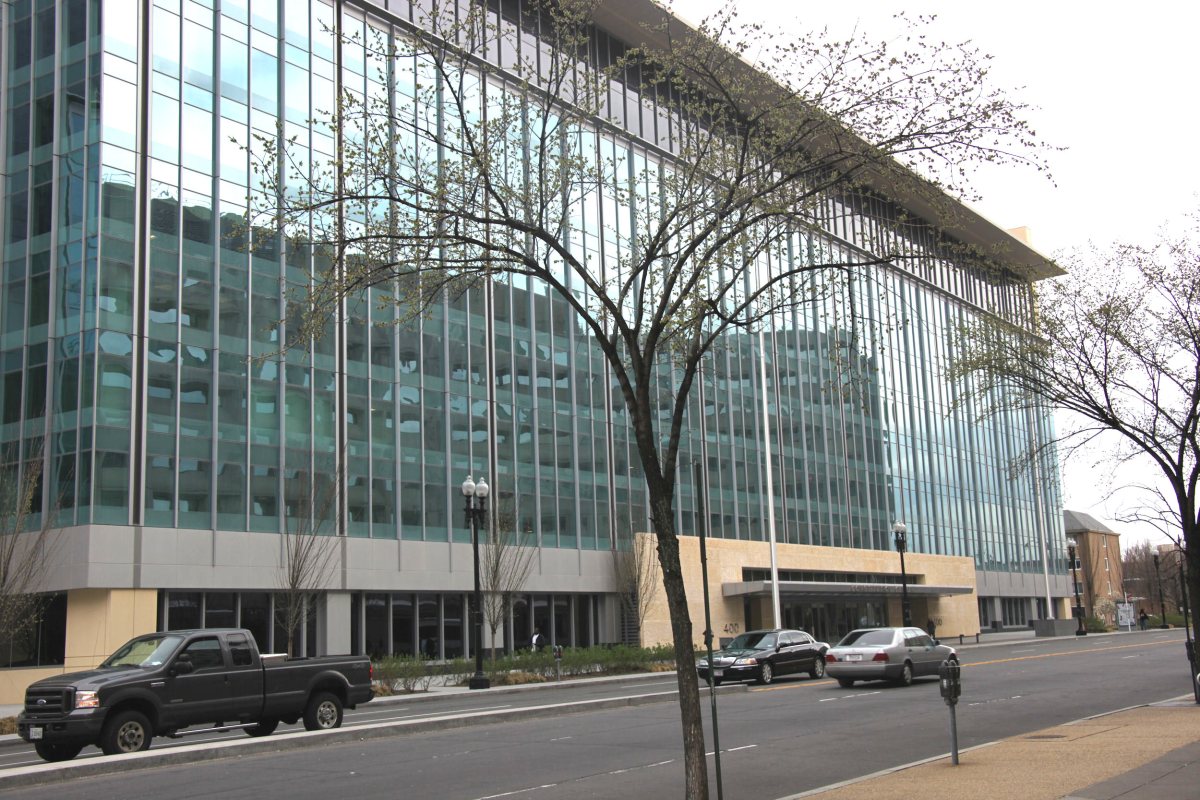
Washington, D.C., the David Nassif Building — raised in 1968–69 by
the Boston developer David Nassif and designed by Edward Durell Stone, architect of
the Kennedy Center — housed the U.S. Department of Transportation for nearly four
decades (1969–2007); renovated and renamed Constitution Center, it remains the largest
privately owned office building in the capital. In St. Paul, Minnesota,
the John Nasseff Heart Center at United Hospital honors John Nasseff (1924–2018), son
of Lebanese immigrants, who rose from the loading dock of West Publishing to its
executive floor and gave away tens of millions — the Nasseff double-f a
classic immigration-era spelling. In Cedar Rapids, Iowa, Helen G.
Nassif’s name stands over the community cancer center, the downtown YMCA and more.
And in São Paulo state, Brazil, street directories dot the map with
Nassif-named streets, from Jaú to Franca — local families honored town by town.
Sources for these landmarks →
Know of another Nassif who belongs on this page? We add profiles only when they can be
verified against credible published sources — suggest one here.